Real Estate Lead Management: From Enquiry to Booking
Generating real estate leads is easier today than it has ever been. You run Facebook ads, list inventory on property portals, and the phone starts ringing.
But out of 100 incoming enquiries, how many actually result in a booked unit?
For many builders and brokers, that conversion rate is painfully low. The harsh truth is that if you are generating hundreds of leads but struggling to close them, your marketing usually isn't the problem your real estate lead management is.
What Is Real Estate Lead Management?
Real estate lead management is the end-to-end process of capturing customer enquiries, tracking their journey, nurturing their interest, and guiding them until they make a booking.
When you use a structured real estate sales process, you stop relying on the memory of your sales executives. Instead, every lead is treated as a valuable asset that is carefully moved through a defined pipeline.
Common Lead Management Problems
Without proper lead tracking software, most growing real estate businesses run into the exact same issues:
- Missed Follow-Ups: A buyer asks for a callback next week, but the sales executive forgets to write it down. The opportunity is lost.
- Duplicate Enquiries: The same customer enquiries on Facebook and Magicbricks. Two different salespeople call them, making the company look disorganized and wasting time.
- No Lead Ownership: Leads are dumped into a common WhatsApp group. Sales reps cherry-pick the easy ones, while harder-to-reach prospects are ignored.
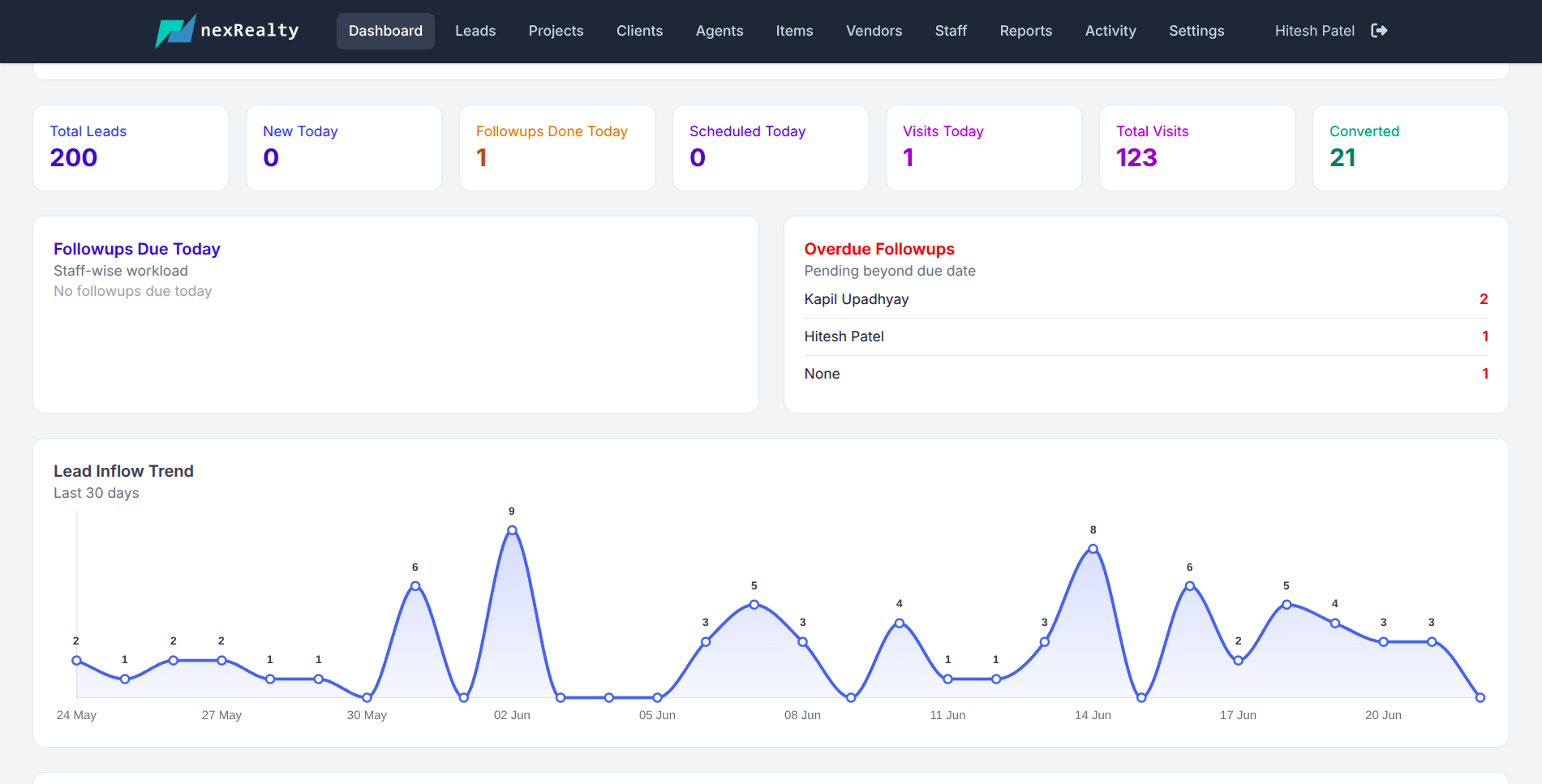
- Poor Visibility: Management has no idea how many active leads are currently in the negotiation phase or which marketing source brings the best ROI.
The Real Estate Lead Lifecycle
A successful real estate sale doesn't happen overnight. It follows a very specific lifecycle:
Enquiry ➔ First Contact ➔ Qualification ➔ Follow-Up ➔ Site Visit ➔ Negotiation ➔ Booking
To maximize your revenue, you need to manage each stage effectively.
Capturing Leads From Multiple Sources
Today's buyers come from everywhere. Your lead capture strategy needs to seamlessly integrate sources like:
- Google Ads
- Facebook & Instagram Ads
- Property Portals (99acres, Magicbricks, Housing)
- Referrals
- Walk-ins
- Channel Partners
Manually copying these details into Excel is a waste of time. Using real estate lead management software allows you to pull all these enquiries into one central dashboard instantly.
Lead Qualification
Not every inquiry is ready to buy tomorrow. Qualification is the process of figuring out who is a serious buyer. Your team should quickly establish:
- Budget: Can they afford the property?
- Timeline: Are they looking to move in next month or next year?
- Requirements: Does your inventory match their needs (e.g., 2BHK vs 3BHK)?
Follow-Up Management
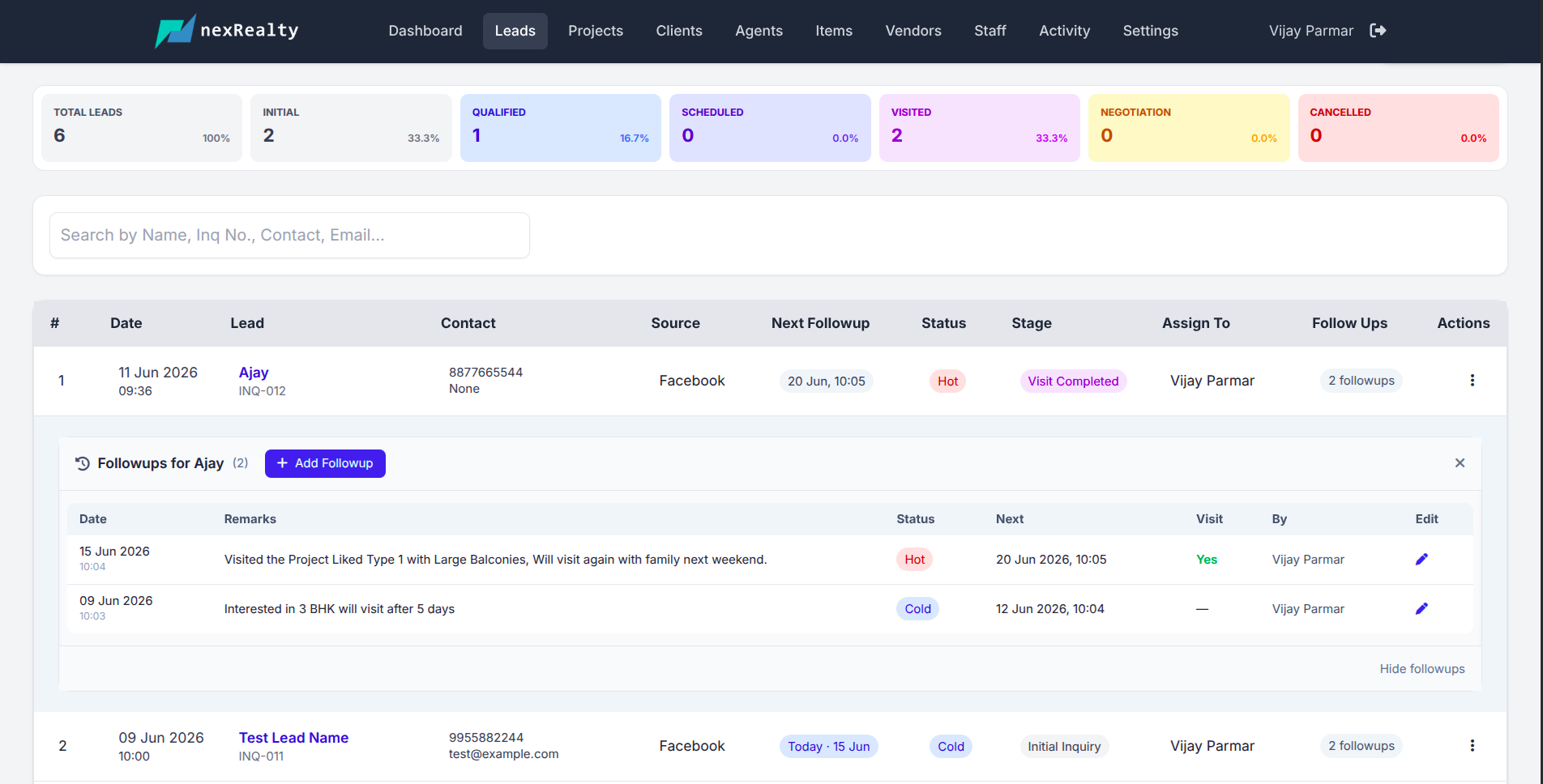
The most critical part of real estate sales is the follow-up. Most bookings happen only after multiple conversations. Buyers need time to review brochures, check finances, and consult family members.
A reliable lead management software automates this by setting tasks and reminders, ensuring your sales team makes the right call on the right day.
Site Visit Tracking
The site visit is the turning point in the real estate sales funnel. If a prospect takes the time to physically visit your project, their intent to buy is high. Tracking site visits effectively—knowing who showed up, who canceled, and what their immediate feedback was—is essential for converting warm leads into hot prospects.
Lead Assignment Best Practices
How you distribute leads determines how fast they get called. Rather than manually handing out leads, smart builders use automated distribution. Leads can be routed based on project rules, executive availability, or a simple round-robin system to ensure fairness and speed.
Using CRM for Lead Management
To make all of this work seamlessly, you need a system built specifically for the industry. Generic tools often fall short because they don't understand site visits, inventory, or channel partners.
This is why many developers use a dedicated CRM for Real Estate Developers to centralize lead capture, automate follow-ups, and manage bookings within a single, powerful platform. Adopting real estate CRM software eliminates data leaks and holds your team accountable.
Key Metrics Every Builder Should Track
To know if your lead management is working, keep an eye on these numbers:
- Total Leads: Volume of new enquiries.
- Qualified Leads: The percentage of leads with genuine intent and budget.
- Site Visits: How many online leads translate to physical footfall.
- Conversion Rate: The percentage of total leads that result in a booking.
- Cost Per Lead (CPL): Marketing spend divided by total leads.
- Cost Per Booking (CPB): Marketing spend divided by total units sold.
Final Thoughts
Generating leads is easy. Managing them consistently is what actually drives sales.
When you implement a strict lead management process supported by the right technology, you stop losing prospects to missed calls and disorganized data. Every lead is tracked, every follow-up is made, and ultimately, more inventory gets sold.
Frequently Asked Questions
What is real estate lead management?
It is the process of capturing incoming enquiries, tracking their details, scheduling follow-ups, and guiding the prospect through the sales funnel until they make a booking.
Why is lead management important for builders?
It prevents lead leakage. Builders spend heavily on marketing; proper management ensures those expensive leads are actually contacted, nurtured, and converted rather than being forgotten in a spreadsheet.
How many follow-ups should be done before closing a lead?
Real estate is a high-ticket purchase. It typically takes anywhere from 5 to 8 well-timed follow-ups to move a prospect from an initial enquiry to a finalized booking.
How does CRM software help manage leads?
It automatically captures leads from all marketing channels, assigns them to salespeople instantly, sets automated follow-up reminders, and tracks site visit attendance in one place.
What are the stages of a real estate sales funnel?
The core stages typically include: New Enquiry, First Contact, Qualification, Ongoing Follow-up, Site Visit, Negotiation, and Booking.