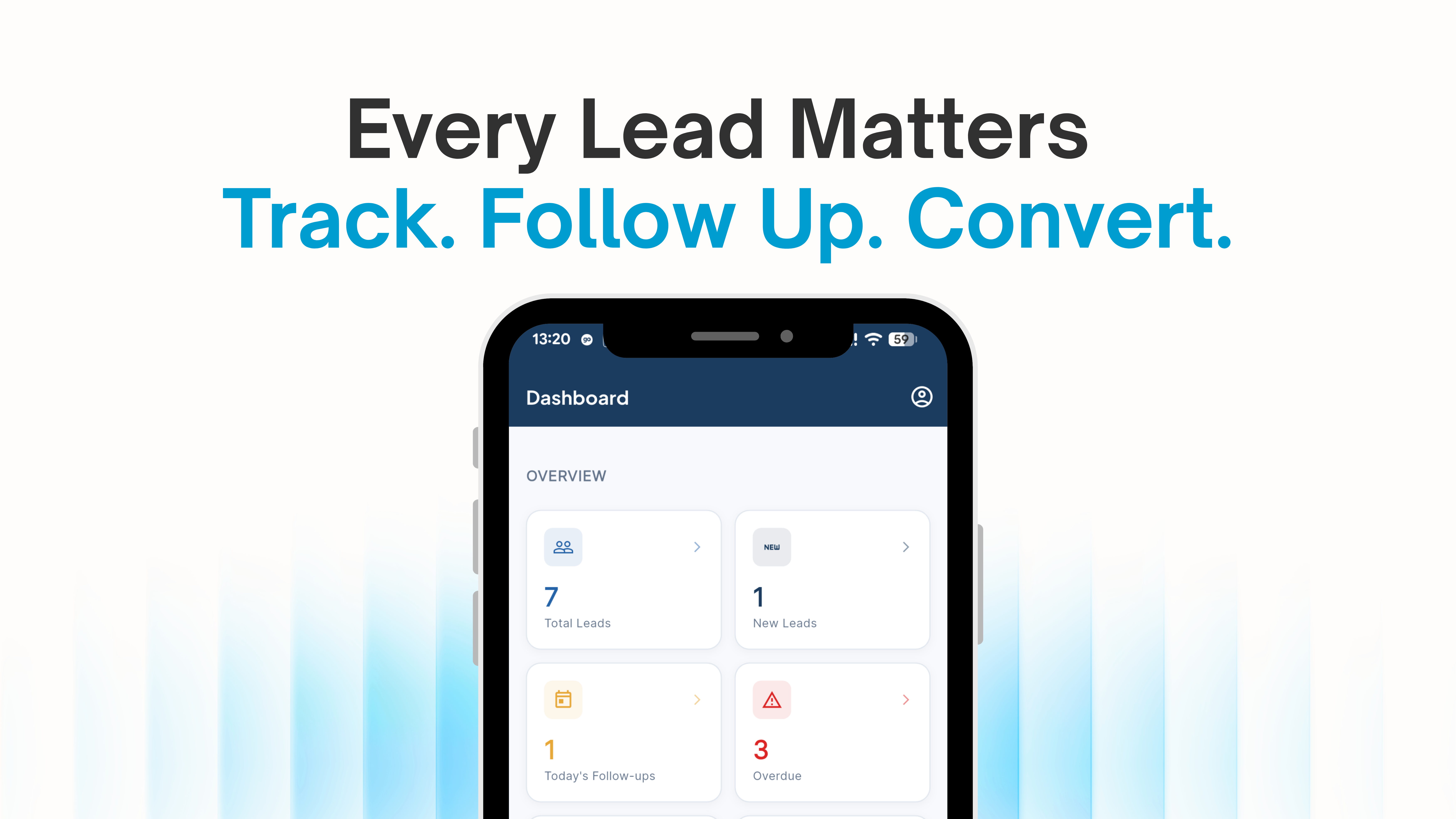
Why Builders and Brokers Need a Real Estate CRM
Generating real estate leads has never been easier. Between Google Ads, Facebook and Instagram campaigns, property portals like 99acres and Magicbricks, and channel partners, enquiries are flowing in constantly.
But managing those leads? That’s where things get complicated.
Many real estate businesses still rely on spreadsheets, notebooks, and WhatsApp chats. This might survive a 20-lead month, but when volumes scale, cracks show. High-intent buyers slip through without a follow-up call. Site visits go unrecorded. Management is left guessing which marketing campaigns actually drive bookings.
If you want to stop leaving money on the table, it is time to upgrade to a real estate CRM software.
What Is a Real Estate CRM?
A crm system for real estate is a centralized platform designed to help builders, developers, and brokers manage relationships across the entire property buying journey.
Instead of jumping between disconnected apps, your team can handle everything from a single dashboard. A solid real estate customer management software captures leads automatically, assigns them to sales executives, schedules follow-ups, and bookings. The goal is simple: total visibility and zero missed opportunities.
The True Cost of Manual Lead Tracking
Most growing real estate businesses run into the exact same roadblocks when they scale without the right tools.
- Missed Follow-Ups: A prospect shows genuine interest but never gets a second call because there is no automated reminder system.
- Scattered Information: When customer details are spread across personal WhatsApp and Excel files, maintaining consistent communication is impossible.
- Zero Management Visibility: Builders cannot easily answer basic questions like, "Which lead source gave us the highest ROI this month?" or "Which executive is closing the most site visits?"
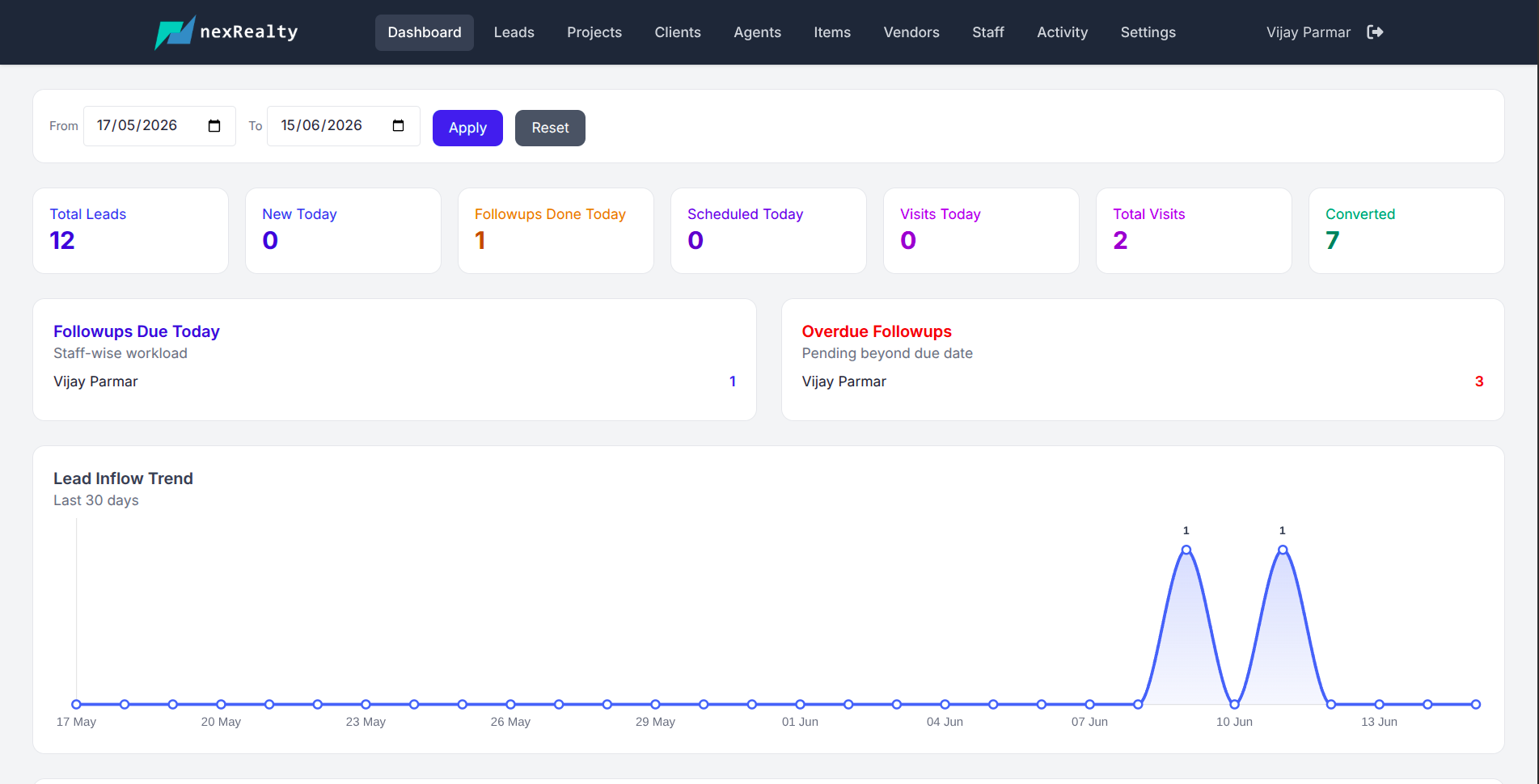
Fixing the Funnel: Core CRM Benefits
1. Automated Real Estate Lead Management
Whenever a new enquiry drops whether from Facebook or a property portal it should instantly enter your system. A CRM captures important details like customer name, budget, project interest, and lead source, immediately assigning it to the sales executive based on set project rules. This structured approach means your team stops searching for numbers and starts selling.
2. Bulletproof Follow-Up Processes
In property sales, the money is in the follow-up. Buyers rarely decide after one conversation; they need time to compare, consult family, and arrange finances.
A CRM eliminates the guesswork by scheduling future calls, creating alerts, and logging all past conversations. Your sales team can pick up exactly where they left off, building trust rather than asking repetitive questions.
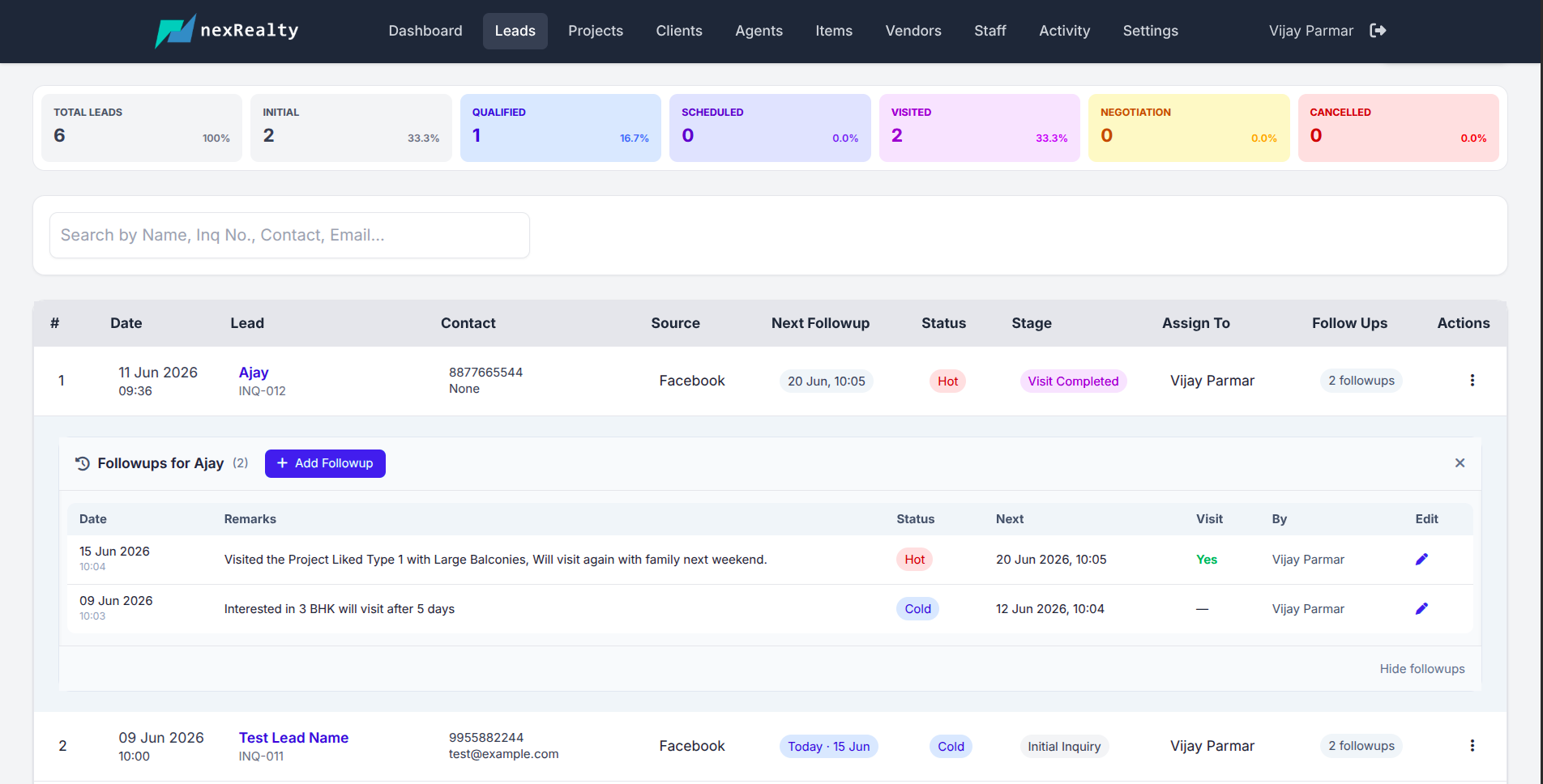
3. Seamless Site Visit & Booking Management
A site visit is the strongest indicator of a buyer's intent. Surprisingly, many firms fail to track these outcomes effectively. Modern software allows you to schedule visits, record attendance, capture immediate feedback, and track conversion rates.
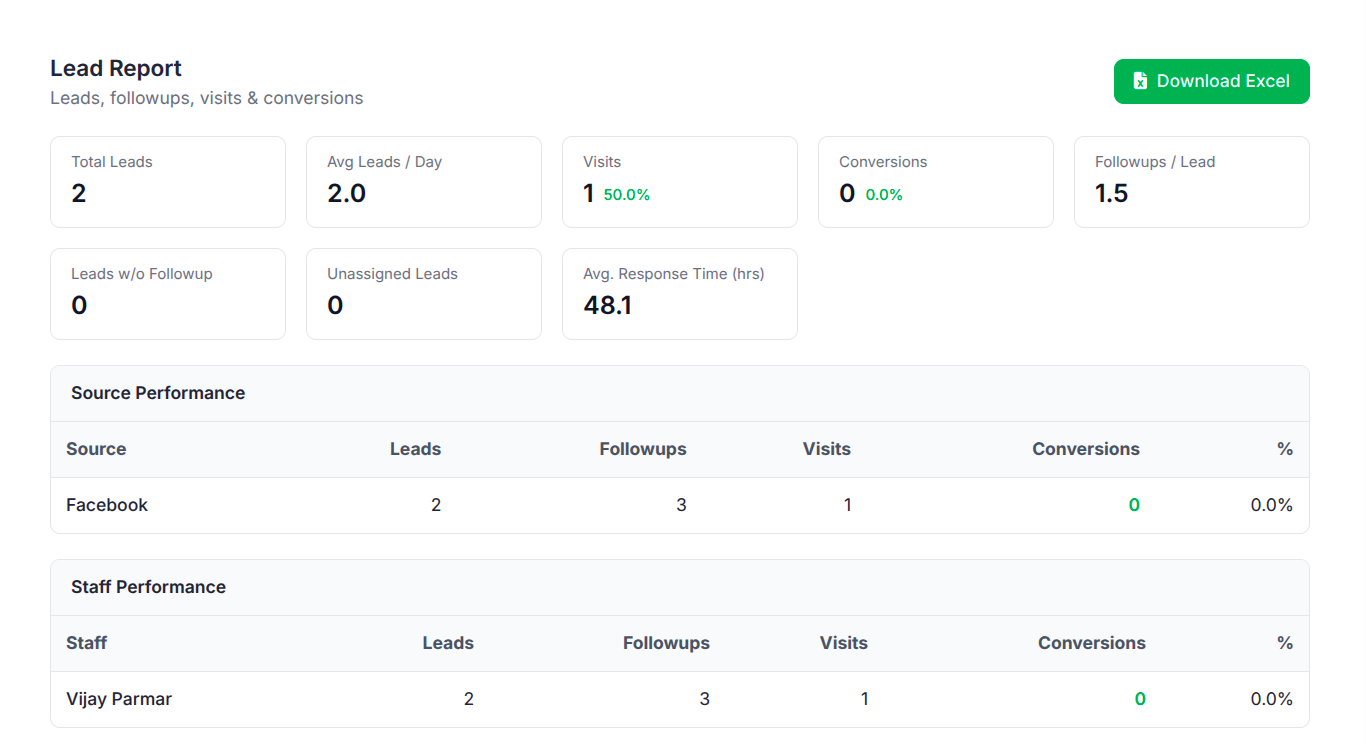
Tailored Solutions: Builders vs. Brokers
While all property professionals benefit from centralized data, the specific needs of builders and brokers often differ.
Why Builders Need a Specialized System
Builders deal with heavy logistical requirements that go beyond basic contact management. They require robust inventory tracking, unit availability status, document generation, and channel partner management. This is why scaling developers move away from generic tools and adopt a dedicated CRM for Real Estate Developers built around the realities of project sales.
How Brokers Win with CRM
Independent brokers and agencies manage a high volume of listings across various locations. A CRM helps brokers categorize their database, match buyers to the right properties faster, and ensure that out of hundreds of ongoing conversations, no hot lead goes cold.
CRM vs. Spreadsheets
Why make the switch? Here is a breakdown of how real estate CRM software outperforms traditional spreadsheet management:
| Feature | Excel / Spreadsheets | Real Estate CRM |
|---|---|---|
| Lead Creation | Manual and time-consuming | Automated from multiple lead sources |
| Follow-Ups | Requires manual checking | Automated alerts and reminders |
| Team Access | Clunky, versions get overwritten | Real-time, cloud-based collaboration with permissions |
| Sales Reporting | Complex pivot tables required | Instant, visual dashboards |
| Inventory Tracking | Difficult to keep updated | Live unit availability at a glance |
Final Thoughts
Generating leads is only the starting point. The real victory lies in moving those leads efficiently through your pipeline until the unit is booked.
Whether you are a developer launching a new project or a broker managing a growing portfolio, relying on manual processes gives your competitors an edge. By adopting a crm for builders or brokers, you create structure, hold your team accountable, and can significantly improve your conversion rates.
If you are ready to modernize your sales process, manage site visits effortlessly, and take control of your inventory, explore our CRM for Real Estate Developers to see how NexRealty CRM can transform your business.
Frequently Asked Questions
What is a real estate CRM?
It is software that helps manage leads, track follow-ups, coordinate site visits, handle bookings, and maintain customer relationships from one centralized dashboard.
Why do builders need CRM software?
Builders use it to handle massive enquiry volumes, track project inventory, monitor site visit conversions, and manage channel partner payouts effectively.
Can brokers use CRM software?
Absolutely. It helps brokers organize their client databases, track communication history across multiple properties, and improve overall closing rates.
How does CRM improve lead management?
It centralizes all incoming enquiries automatically, prevents duplicate data entry, sets immediate follow-up tasks, and provides complete visibility into the health of your sales pipeline.
Is CRM better than Excel for real estate businesses?
Yes. While Excel is great for static data, a CRM offers automated workflows, dynamic reporting, and task reminders that are critical for an active sales team.